LESVOS GEOPARK AN EDUCATION DESTINATION FOR UNIVERSITY STUDENTS FROM ABROAD
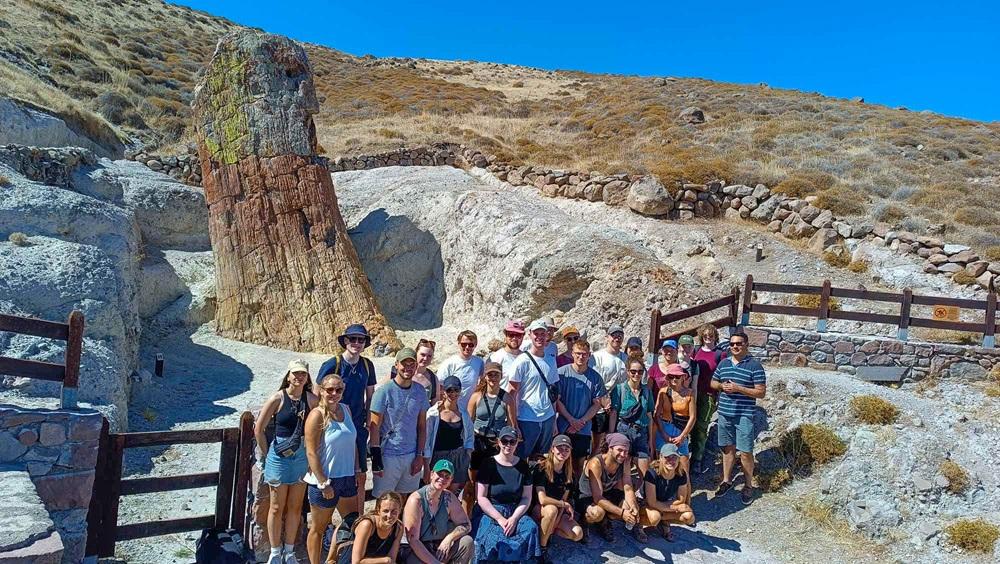
Postgraduate students of the University of Kiel from Germany are in Lesbos to carry out a field exercise as part of the Postgraduate Study Program of the Department of Geography, who were accompanied by the responsible Professor Nasos Vafeidis.
In particular, the students visited the Petrified Forest of the Kalloni Gulf Wetland and the Natural History Museum of the Lesvos Petrified Forest
The students were accompanied and informed about the Lesvos Geopark and the places of interest by Dr. Ilias Valiakos, Head of the Research Department of the Museum.
The students visited the Kalloni wetland where they had the opportunity to learn about the geological history of the area, biodiversity and the actions of the Kalloni Environmental Information Center. At the same time, they participated in a bird watching activity where they met unique birds for the Aegean region that choose the wetland of Kalloni as their place of residence.
The students then visited the impressive fossil sites along the new Kalloni-Sigrio road axis where they had the opportunity to learn about the extensive program of excavation, conservation and highlighting of the fossils excavated during the opening of the road axis.
This was followed by a visit to the Petrified Forest Park where they got to know root systems and standing fossilized trunks in their natural environment, while at the same time they were informed about the excavation and preservation procedures of the fossils. At the same time, they were informed about the impressive results of the Museum's recent excavations on the islet of Nisiopi and the rescue excavations being carried out along the Kalloni - Sigri road axis.
At the Natural History Museum of the Lesvos Petrified Forest, where they were informed about the latest excavations, the new types of fossils, the creation of the Lesvos Petrified Forest, the paleogeographical evolution of the Aegean and the scientific data resulting from the study of the Petrified Forest. The students then came into contact with the findings of the Petrified Forest during their tour of the Museum's permanent exhibition spaces and their importance for understanding the geohistorical evolution of the Aegean.
They were also informed about the seismic activity in the Aegean and participated in the simulation of large earthquakes in the seismic bank of the Museum.
The students, after the field training exercise, declared that they were impressed by the knowledge they acquired in the Petrified Forest of Lesvos and the work of uncovering and protecting the fossils and characterized the area as a unique laboratory for the study