Impressed by the geological and natural heritage of Lesvos and the Petrified Forest
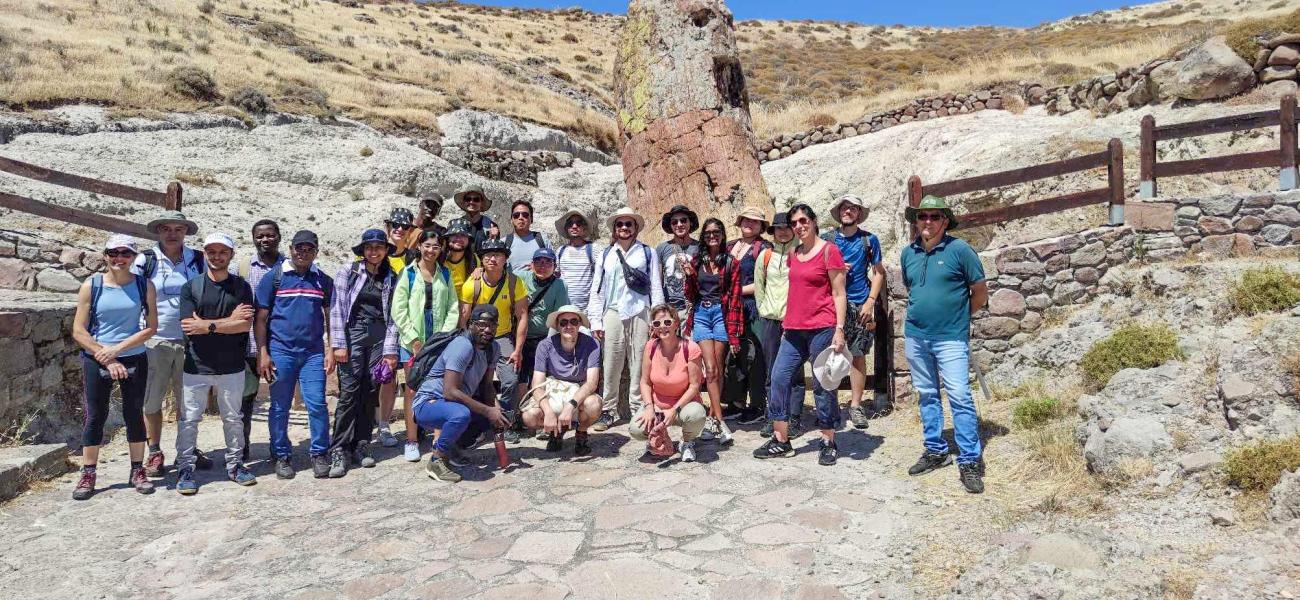
The field training program of students of the PANGEA Postgraduate Program was completed with great success, from June 23 to 30 in Lesvos. The students come from the University of Athens/Department of Geology and Geoenvironment, the University of Lille (France), Uppsala University (Sweden) and the University of Minho (Portugal) and the program was implemented in collaboration with the Natural History Museum of the Petrified Forest of Lesvos and the UNESCO Chair for Geoparks at the Department of Geography of the University of the Aegean.
This is yet another outdoor educational program implemented in Lesvos, which is now establishing itself as a particularly important educational destination. To date, 5 multi-day educational field actions for students have been implemented during this year, while the implementation of corresponding field actions in the Lesvos Geopark for students from foreign universities has already been planned during the months of August and September.
The students carried out outdoor exercises in the protected areas of Lesvos, the Petrified Forest, the Natural History Museum and the volcanic geotopes of the Lesvos Geopark. The students visited the new fossil sites along the Kalloni-Sigri road, Antissa and the geotopes of the area, the Nissiope Marine Park, the Kalloni Bay wetlands and the Environmental Information Center, the volcanic geotopes of Lepetymnos and the Molyvos-Petra area, the Industrial Olive Oil Museum of Agia Paraskevi, the geothermal field and hot springs of Hippocrates Polichnitos, the Olympus mountain range and Agiassos and many natural monuments of the island that has been recognized as a UNESCO Global Geopark as elements of geological heritage that contribute to sustainable local development.
In the Petrified Forest of Lesvos
One of the most important educational actions was implemented in the protected area of the Petrified Forest of Lesvos. It included a visit by students to the Petrified Forest Park, the Nissiope Marine Park, the Plaka Park, the new fossil sites along the Kalloni-Sigri road, the Nissiope Marine Park, and the fossil sites and geotopes in the Antissa area.
At the Petrified Forest Park, students had the opportunity to observe the fossil ecosystem, visit the fossil sites and learn about the plants of the Petrified Forest, their evolution over time, their chemical and physical properties and the information they provide about climate change and the creation and evolution of the Aegean.
At the same time, they had the opportunity to get to know the new fossil sites along the Kalloni - Sigri road axis, where impressive new findings were recently revealed during rescue excavations carried out by the Natural History Museum of the Petrified Forest of Lesvos. The students learned about the projects and interventions for the promotion and protection of the new fossil sites of the Petrified Forest
The students also visited the Natural History Museum of the Petrified Forest of Lesvos, where they toured its exhibition spaces, got to know the different species of plants of the Petrified Forest, the plant fossils from all over the world and the Greek area which are hosted in the Museum's display cases and testify to the evolution of plants on earth. At the same time, they had the opportunity to learn about the natural phenomena of volcanism and especially the phenomenon of earthquakes and participated in the experiential educational activity of simulating destructive earthquakes from around the world at the Museum's seismic table.
The tour of Plaka Park included getting to know unique root systems and impressive standing fossilized trunks such as the giant cinnamon tree! The participants were informed about the excavation and conservation procedures of fossils and also got to know the natural environment that currently hosts the fossilized trees.